MAA Blog
Understanding Vanity Publishing…
The term ‘Vanity Publishing’ dates back to the late 1940s … Over seventy years of the same playbook, and the warning signs authors are told to watch for today haven't changed much. The real giveaway for how to spot a vanity publisher is how they present themselves. They like to pose as traditional publishers, "offering" you a publishing deal, using the language of acquisition and selection, when in reality there's no care factor at all about what they're publishing. They're not upfront about who they are or what you're actually buying into.
That's the whole issue for me: it's not that they charge the author to publisher, it's the dishonesty around it.
The model is simple enough on paper: the author pays a publisher to produce and distribute their book. Not so dissimilar to hybrid publishing, right? Wrong.
Where it goes wrong is that while true hybrid publishers care about what they’re publishing, vanity publishers typically skip any real quality control, offer little to no genuine distribution or marketing support, and leave the author carrying all the financial risk while they carry almost none.

Understanding Hybrid Publishing…
For a long time, authors faced a stark choice: hand the whole process over to a traditional publisher or take it all on themselves. Hybrid publishing has emerged as a genuine third option, and it's one I get asked about more and more.
In a hybrid arrangement, you contribute to the cost of producing your book — think editing, design, typesetting, production — while the publisher brings the professional infrastructure: vetting, editorial oversight, their own imprint, and a strategic approach to distribution. In exchange, you keep a far bigger slice of the royalties than a traditional deal would ever offer, often 70-90% or more of net.
When done right, it is a genuine partnership rather than a transaction. The publisher has skin in the game too — a book that sells well reflects on them, and most take a modest percentage of royalties to recoup the time and expertise they've invested. Because of that, it's very much in their interest to only take on books they believe in and produce them well.

Understanding self-Publishing…
Self-publishing refers to the process of independently publishing and distributing your own work, such as books, e-books, or other written materials, without relying on traditional publishing houses or companies. Self-publishing allows authors to take full control of the publishing process, but it does mean that you are responsible for all aspects of publishing.
A self-published author is their own publisher, responsible for financing and managing the whole process. Authors can publish their books independently, either in print or digital formats, without involving a traditional publisher. They handle everything, including editing, cover design, formatting, marketing, and distribution. Self-published authors retain creative control, full rights, and receive a larger portion of the royalties (often the full 100%).

Understanding traditional Publishing…
If you've ever felt bewildered by the choices, we're here to shed some light on the different avenues of publishing. In this edition, we'll provide an exploration of the traditional publishing industry. If you would like to what more about the five main models of publishing, please pop over to the 5 Models of Book Publishing article.

Word count by genre: How long should my book really be?

5 Models of Book publishing
The publishing space is divided into quite a few camps at the moment… which can be somewhat confusing for authors looking for a publishing opportunity. So, I thought I’d take a moment to pen a little something about the different types of publishing… starting with traditional publishing.

Effective Book Marketing Strategies That Every Author Should Know…
To stand out in the crowded book market, authors must develop a strong personal brand and implement effective marketing strategies. In this blog post, we'll explore some innovative marketing ideas specifically tailored for authors, helping you reach a wider audience, boost book sales, and establish a loyal reader base.

‘So That happened’ by Tami Sussman
Author chat with Tami Sussman, author of ‘So That Happened’ (Walker Books) and ‘Tiny Tradies’ (Affirm Press)

Author chat: Pj kelly, ‘The Good teacher’

A ‘happy hour’ with Jacquie Byron

The myths of getting published

Novel Writing: Getting started

Want to write great dialogue?

choosing the right name for your characters

Writing a Synopsis
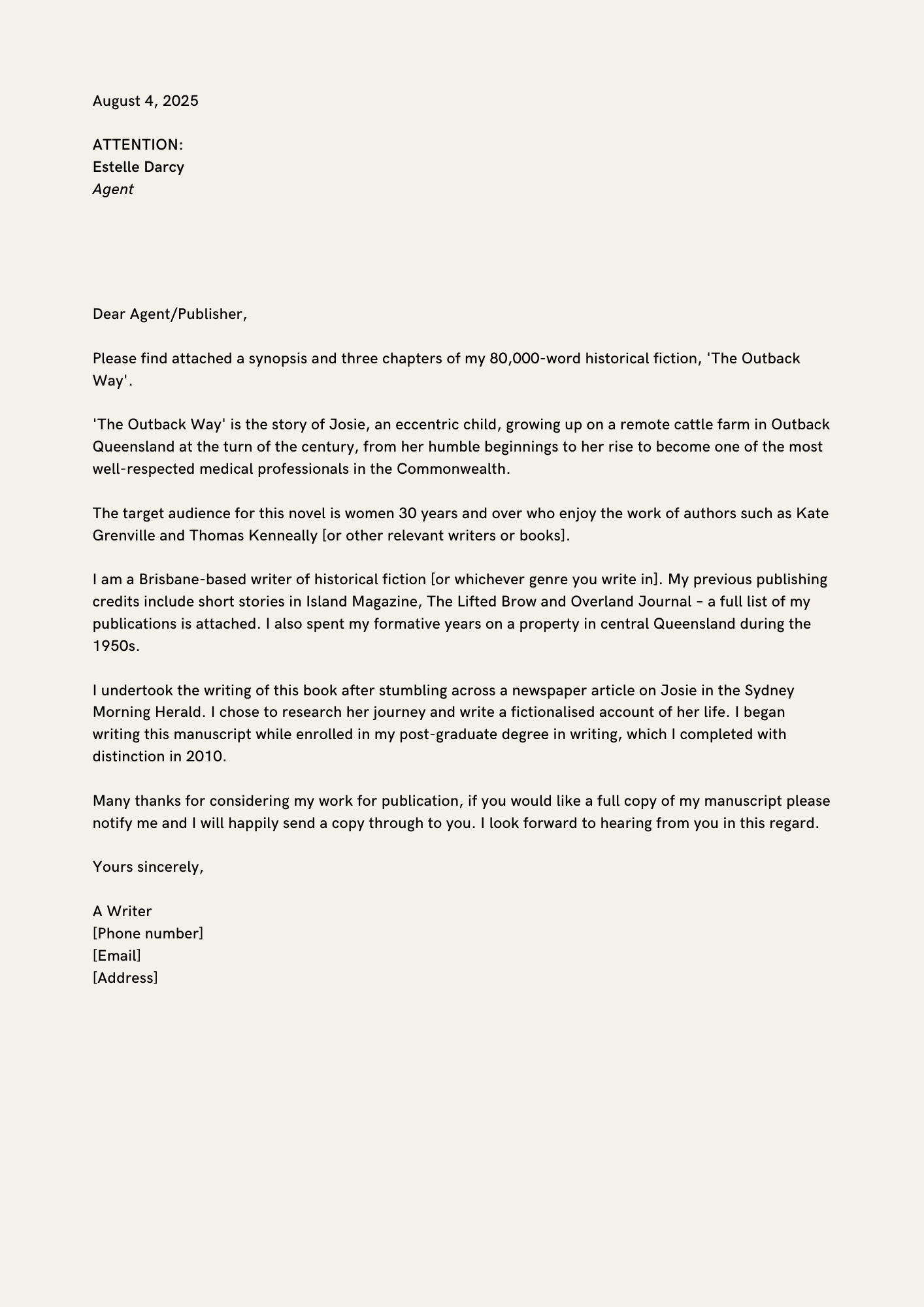
Writing a Cover Letter

Publishing: Children's books explained

Writing and editing non-fiction manuscripts

How To Write a Picture Book For Children & Young Readers
